
Draw-A-Box Lesson 1: Thoughts and Homework
Draw-A-Box time. This is my fourth go at draw-a-box. I like to do at least lessons 1-5 every time I come back to drawing, and I’m always better for it. I started this iteration a month ago on my tablet just to learn how to get the feel for digital drawing. So, you’ll see some lessons in digital, and others in ink (I know, a big no-no in the course).
I’ll dive a little bit into the first exercise, but before I do, I wanted to give my two cents on Draw-A-Box (aka DAB). It’s a great course, but with a lot of caveats.
Even though I often return to these lessons and exercises, I don’t think this is the best method for beginners. Yes, it’s free, and the amount of content and knowledge for a free drawing course is incredible. Free doesn’t absolve a perfectly fine program of criticisms.
You’ll often see DAB recommended to new aspiring artists on Reddit. And boy do I fucking hate Reddit (I’m looking at you r/hawks). The lessons on DAB are very strict and “rigid,” however, as the instructor (aka “Uncomfortable”) states in this video, it’s meant to be strict only for the purposes of this specific course.
A new artist who doesn’t grasp that idea might think that’s how they have to draw outside of these lessons. And believe me, just browse r/drawingfundamentals, and you’ll see it. You’ll also see people spending months perfecting boxes and lines before they move on to anything else. There’s a lot of content, and it’s easily misinterpreted by new beginners.
Because there’s so much content, it can also be overwhelming. In addition to the text, there’s video, and it’s often stressed that both must be consumed before moving on, even though both mediums state exactly the same thing. I feel that often there is a lot of redundancy and hammering in the same point.
There also isn’t really any “play.” I know. Uncomfortable addresses this in the exact video that I linked. But I do find that courses that explore play with art foster the best environment for learning (my opinion). I can’t find the quote, but someone said that DAB is like learning how to cook, except instead of making basic meals, you practice heating a pan with oil 100 times before you move to the next step.
And that leads me to this. New artists, especially those on r/artfundamentals, may be surprised that this isn’t a fundamentals art class. And yes, Uncomfortable addresses that in this video, too. You don’t learn values, shading, or colors. You learn construction drawing. Form and perspective.
Anyway, that’s my rant. I understand it’s not a perfect analysis of the course. But that’s my view. The fact that I return to this course every so often speaks for itself. So let’s look at what I did.
Lines
Superimposed Lines
This is a pretty straightforward exercise, and one that I like to do for a quick warm-up. You draw a straight line and then draw over it eight times. The purpose is to work on confident strokes. Here’s the link to the exercise page with some troubleshooting tips.
Below are a few examples of the exercise. You’ll notice individual lines; those were ghosted lines that I practiced (more on those in a different post).
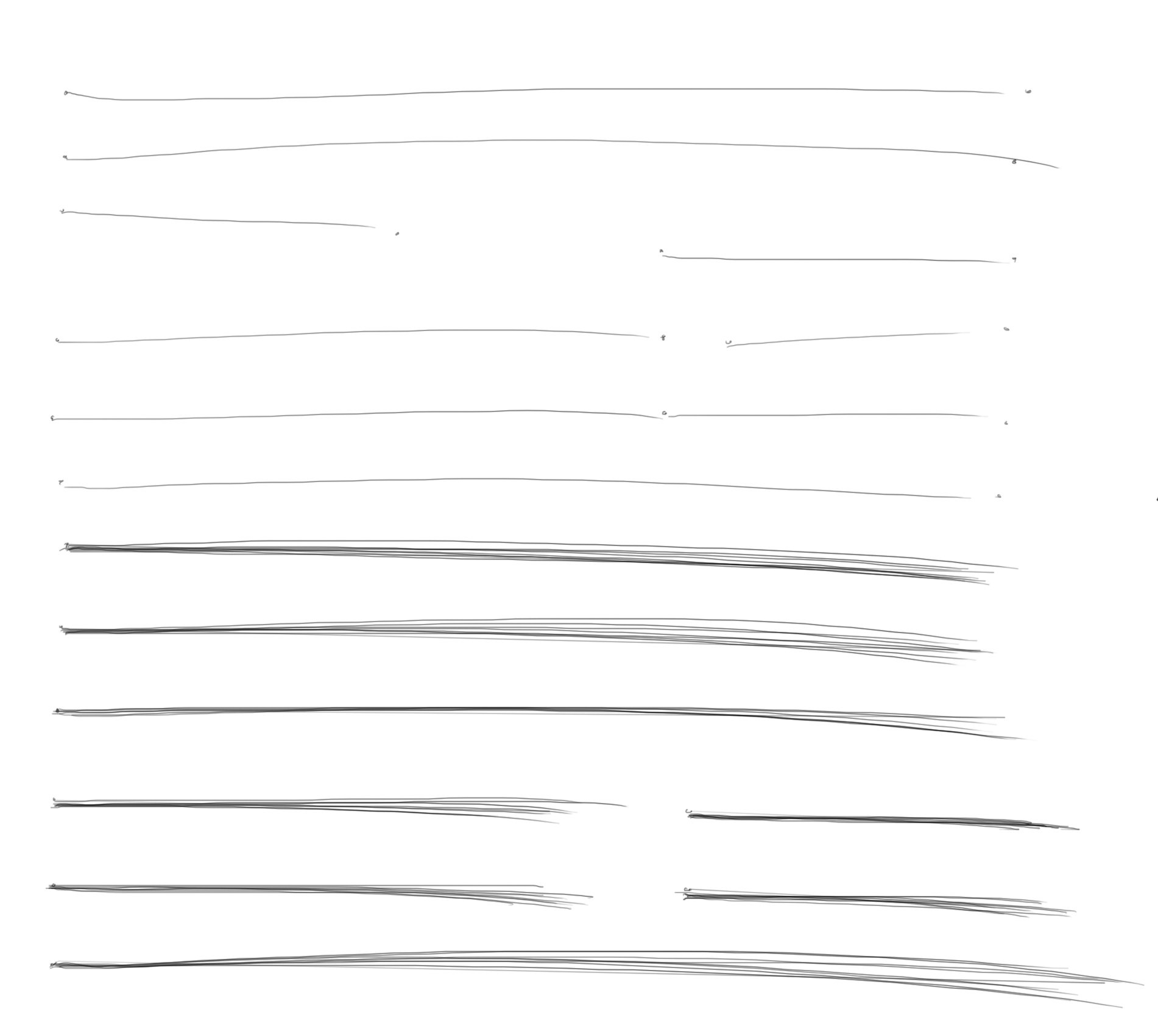
First off, these examples are all off the same canvas from Photoshop; I just “cut” them into smaller pictures. You can tell which ones I rushed and which ones I didn’t. There are a lot of frayed ends, and that’s fine. What isn’t fine is frayed ends at both ends. That indicates not starting at the same spot and really rushing. You can see that in a couple of lines that I did.
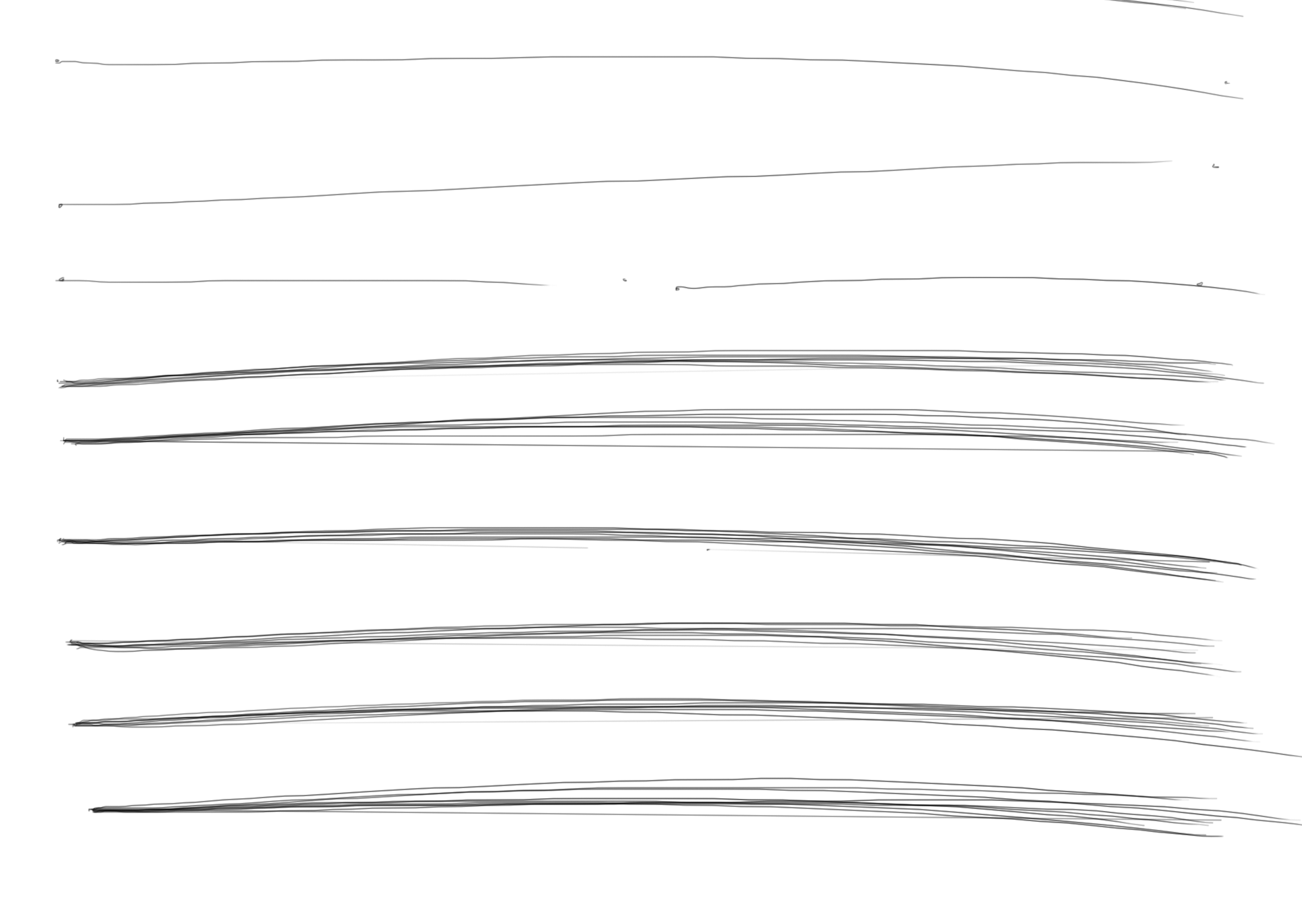
This is another example, with more frayed ends but better control at the start.
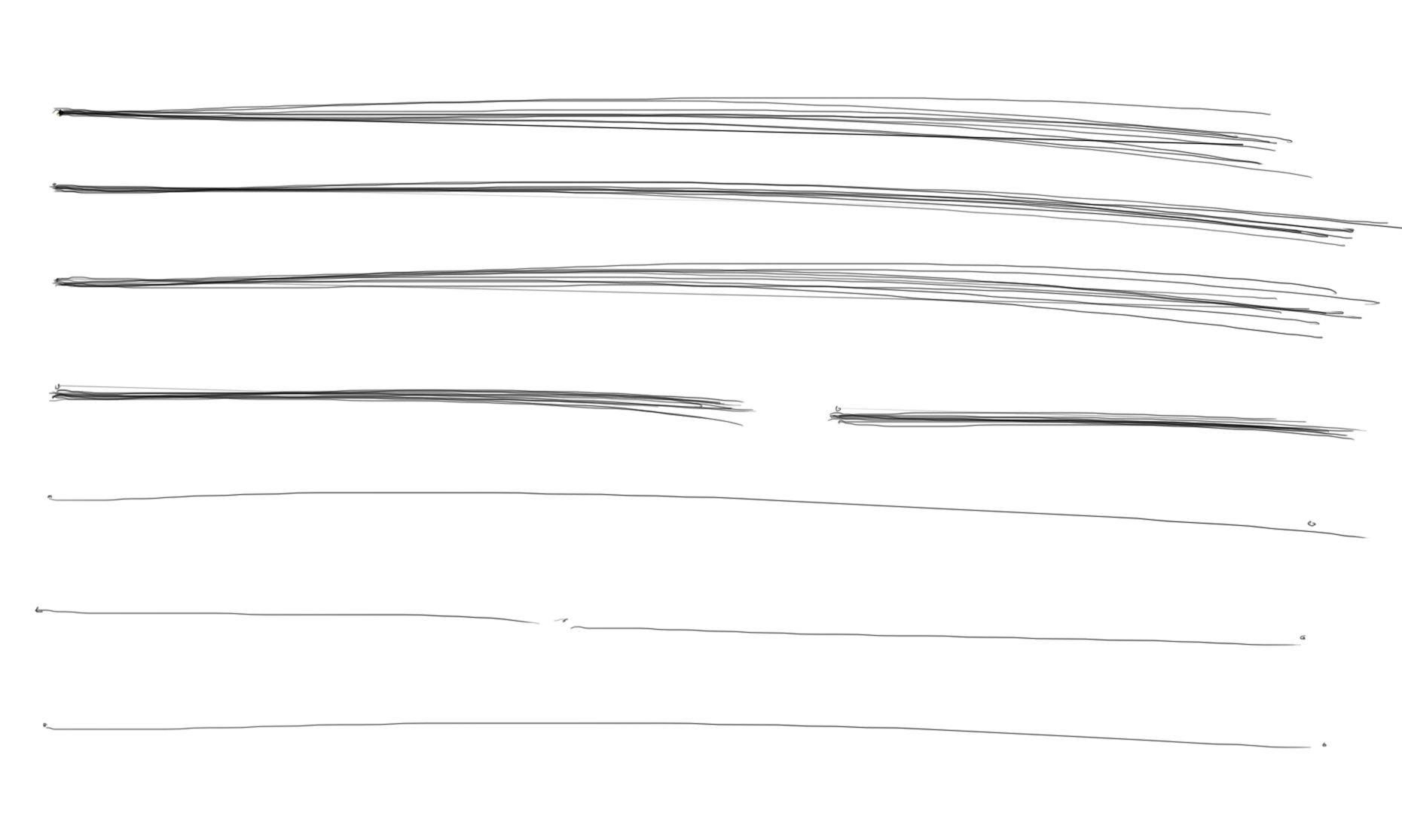
And another example. Not horrible except for the bottom two. You can tell that I was rushing with frays on both ends.
There are two more exercises in the Lines portion of Lesson 1: ghosted lines and ghosted planes. I’ve probably bored you already (if you’re still here), so I’ll save those for another day. Ghosting is actually a very useful tool that I use for every mark I make—not just in the Draw-A-Box courses.